annual report 2025
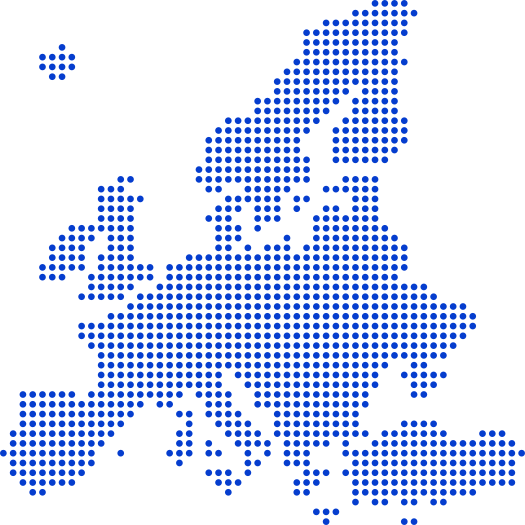
2025 was the year we became international
For twelve years, our product had a single edition, in French, focused on policies affecting France. In May 2025, we launched a second edition, in English, focused on policies affecting the European Union.
Launching a second edition meant expanding to a new target audience, and that was a big step — especially in an EU policy information market that is crowded, with deep-pocketed players and fierce competition for news and monitoring tools.
So we did it our way. We took the time to think, test, adapt, and test again to find the right newsroom, marketing, and sales organisation. We set competition to one side and focused on our craft: in-depth reporting and monitoring tools that are obsessed with being useful.
This fixation can only exist because we are independent.
Being owned by our staff allows us to continue to favour a subscription model that rewards usefulness over influence and our craft over short-term profit.
But independence is not only for us to claim; it is for our readers to judge. This annual report provides them with a clearer view of what Contexte looks like from the inside.

Jean-Christophe Boulanger, Chief Executive Officer and Clémentine Forissier, Editorial Director

key insights
Our economic independence
The whole team works every day to ensure that we turn enough profit to finance our growth without relying on external capital.
of annual recurring revenue on 31 December 2025
growth in annual recurring revenue compared to 2024

While turnover provides a snapshot of average business volume over the past year, annual recurring revenue (ARR) provides a more current view at a specific point in time, in this case, at the end of the year.

Independence is key to our business model. And, to be true to our values and be fully independent, we need sufficient income to cover our expenses. Our profitability must be strong enough to finance our growth without external input.

Antoine de Cassan, Chief Finance Officer
In 2025, three key factors played a role in our growth:
The successful launch of our EU Energy, vertical in English — the fastest commercial start in our history.
The acquisition of new subscribers across our eight existing verticals in France.
Most of our existing clients upgraded to Advanced or Enterprise plans — taking advantage of automated monitoring features.

Our subsidies
In 2025, we received:
from the Media Pluralism Fund by the French ministry of Culture
in Innovation Tax Credits (CIR/CII)
in apprenticeship grants
To achieve our goals, Contexte aims to grow while remaining independent. This dual objective means profitability without subsidies to ensure we’re not economically dependent on the political world that is the focus of our reporting.
We believe, however, that some subsidies can bolster our independence — under certain conditions. These are the only sources of funding that can come with no strings attached. A capital investor has voting rights. A lender can exert pressure if there are difficulties in servicing a loan. A subsidy, on the other hand, can be a gift without a quid pro quo.
We have therefore chosen to accept certain subsidies — those that allow us to remain completely independent, both operationally and editorially.
100% of the capital belongs to the team
The three cofounders own 94% of the company's capital, while the rest is owned by 60 staff members.
Contexte is absolutely independent. No sponsors, no external shareholders — just trustworthy, subscription-funded journalism coupled with policy monitoring tools built in-house.
The majority of the company’s capital belongs to individuals or organisations that do not hold majority interests in companies other than Contexte.
How many subscribers do we have?
Each year, we strive to expand our reach, deepen our coverage and refine our product.
Highlights of 2025:
subscriber organisations
growth in subscriber organisations over the year
subscriber organisations added since 2024
subscriber retention rate (in value terms)
subscription churn (1% less than last year)
What does a Contexte subscription pay for?
for an average annual subscription of €8,000:
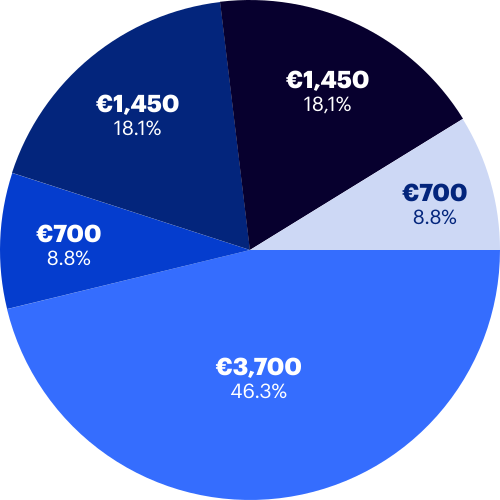
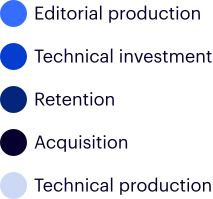
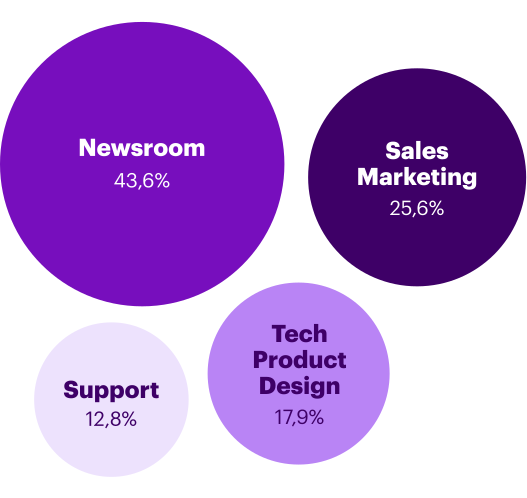
The cost of each department includes salaries, external services and overheads.
People in numbers
staff and contributors* = 90 in Paris + 25 in Brussels
years = Average age
on permanent contracts
women
men
*as OF december 2025
Who joined us in 2025

54 people joined Contexte in 2025
33 people under long-term contracts:
20 in France and 13 in Belgium
21 people under other contracts:
17 in France and 4 in Belgium
Recruitment 2025
Moving internally: a growing momentum
Last year saw many internal moves at Contexte. Whether becoming a manager, joining another team, or moving to a new country, career paths are increasingly being built from within.
These moves were particularly numerous in 2025, as we clarified the process.

Our ambition is to make internal development possible for everyone, without barriers linked to status or seniority.

Sophie Obolensky,
Culture & Talent Director
What has changed in practice:
- All roles are systematically opened internally.
- When an internal move does not go ahead, we explain the decision, acknowledge any frustration and discuss next steps — such as a progression plan, training, HR and line manager follow-up, or support from our internal coach.
Our ambition is to continue to strengthen our internal mobility process so that it becomes a natural, fair and accessible reflex for everyone.
Building transparent career paths and fair pay in Belgium
In 2025, the Brussels office reached an important milestone in its organisational development by recruiting a dedicated HR manager, Pedro Vitória.
This role has enabled closer support for all employees, strengthened the local execution of HR initiatives, and helped to gradually bring our HR practices into line with Belgian labour law and regulatory requirements.
Our HR team devoted considerable time to developing salary benchmarks. The goal was simple: to create a system that is fair and transparent for employees and consistent with Belgian legal requirements.
Following three workshops with journalists, managing editors, and managers in Brussels, we formalised a new framework based on job descriptions, skills grids, and salary ranges. The system now includes eight levels for journalists and five levels for managing editors, each linked to a clear description of reporting lines, responsibilities and duties.
Feedback from those directly affected, internal experts and external legal advisors helped refine the final version to ensure the framework was both technically robust and comprehensible to the Brussels team.
Key highlights
2025 has been a whirlwind year for the editorial team
© Jérémie Luciani for contexte
Our journalists explored hidden corners of French institutions
With a chaotic French political environment and the French Parliament still deadlocked in early 2025, our journalists explored hidden corners of French institutions: among others, stories on the power of the French civil service, the government's SGG legal secretariat (SGG), the Constitutional Court and the 'grand corps' of senior public civil servants. At the same time, a team of journalists across various verticals delved deeper into the Rassemblement national, the opposition party greatly strengthened by a snap legislative election in 2024.
Then the annual budget season — a recurring theme for Contexte in Paris — was the opportunity to increase collaboration between Pouvoirs and Santé.
Strengthening coordination among our verticals
A new political priority for the European Union — competitiveness — prompted the newsroom to rethink editorial coverage across our verticals.
One of the key moments of the year was the mid-July presentation of the draft EU budget for 2028—2034, along with all its accompanying sector-specific documents. To cope with this flood of legislation, we prepared for several weeks in advance by assigning roles to each journalist based in Brussels and identifying the key information we sought. We then published a wealth of exclusive reports on key aspects of the future budget, while also swiftly producing in-depth analyses.
In November, COP 30 in Belém was the arena selected by Envi, Energie and Energy to road-test collaboration between the French and EU teams; two reporters — Victor Roux-Goeken and Damien Genicot from the French and EU teams respectively — went to Brazil to cover the conference. In Paris and Brussels, editors and adaptation editors woke in the early hours to pick up coverage from Belém and translate it daily, so that important stories would appear in both the FR and EU editions.
To better manage this cross-functional approach on a day-to-day basis, we recruited a deputy editor-in-chief, Quentin Ariès, who joined us in September 2025.
Contexte: the new kid in the EU bloc
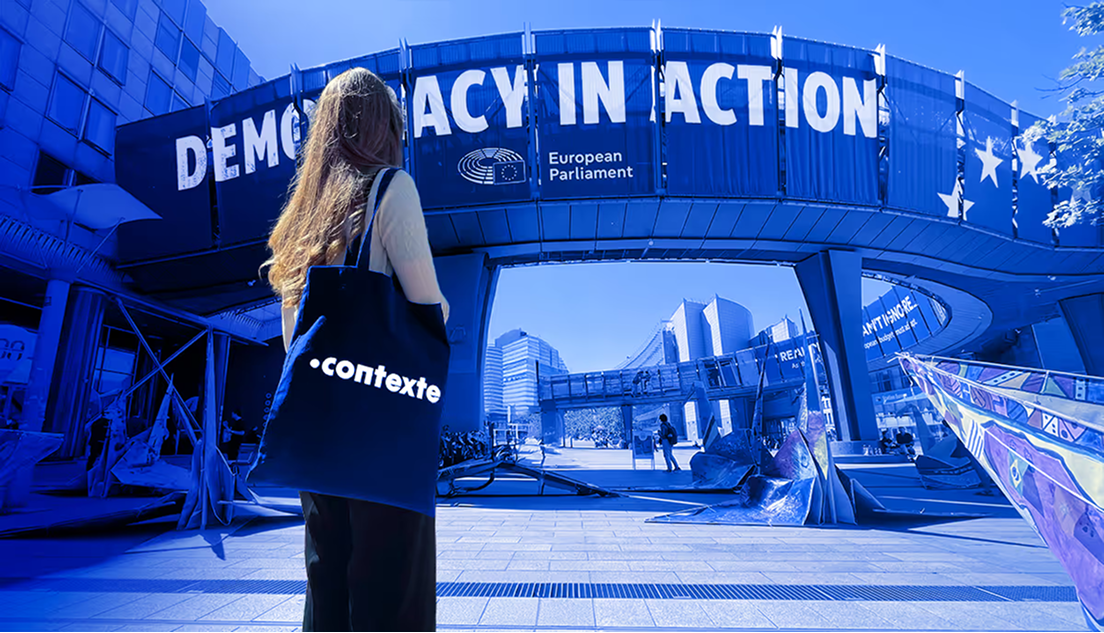
The main mission for Contexte in 2025 was to launch our first English-language edition.
To achieve this, we worked on adapting our existing structure
With an existing team of 18 French-speaking journalists in Brussels at the beginning of 2025, we agreed that each journalist could choose to write in either English or French and organised the editorial workflow accordingly.
We then devoted the first part of the year to recruiting and welcoming new editorial staff: Jack Schickler, Energy Managing Editor; Mariette Thom and Ciarán Sunderland, Energy English-speaking reporters; and Anna Martino and Gabriela Galindo as adaptation editors.
We felt it was essential to build on this foundation, as we sought to become the go-to media outlet for public affairs professionals with a European reach.
Adaptation, not translation
In the run-up to the EU launch, we focused on developing our English writing standards and ensuring that our first English vertical maintained the editorial quality that has made our French product a success since 2013.
We also tested how we adapt content from English to French and vice versa, a process that now happens daily at the end of each writing day. Our two briefings aren’t mere translations of each other; they present content in ways that are relevant for their distinct audiences. This was, and remains, the most challenging aspect of our work.
The EU launch allowed us to gain perspective on what works, what needs improvement, and what needs to change to reach a new audience, giving us the blueprint for our second successful English vertical launch in March 2026.

I really appreciate being able to work in two languages at Contexte. Switching from French to English and back has a really positive effect on my writing, thanks to the little insights I pick up from both languages.

Anna Hubert, Power journalist
A first English vertical: Energy!
Energy policy has been at the forefront of our coverage since we established Contexte in 2013, and the news agenda remains jam-packed.
After confronting an energy crisis in 2022, the EU has been looking to move on from its Green Deal to one that emphasises clean industry. It’s had to juggle its desire to wean itself off Russian energy with a need for secure alternative supplies, and balance its climate ambitions with the drive to stay competitive.
The 1,172 briefs, 54 articles, and 128 leaks Energy published in 2025 included:
- Exhaustive reporting of a pioneering regulation to phase out Russian gas imports;
- Daily dispatches from the COP30 climate summit, from an on-site reporting team in Brazil;
- Big money — from the creation of the EU’s €409.3-billion Competitiveness Fund, to a trade deal that committed to buying $750bn in US energy;
- In-depth features on everything from the changing role of the Brussels nuclear lobby to the European Commission’s bid to streamline and simplify energy and climate laws.
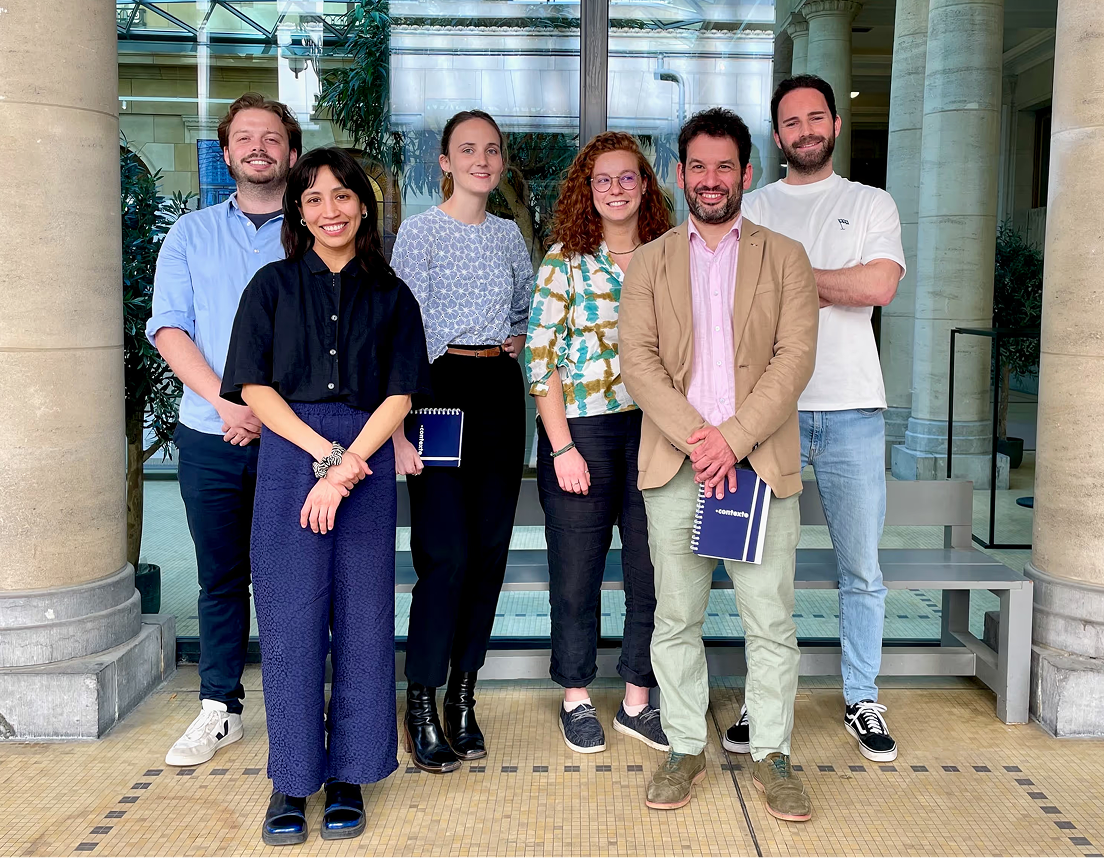
Not to mention, there are many cultural issues of integrating new people into a newsroom that was previously fully francophone; procuring QWERTY keyboards to sit alongside the French-standard AZERTY, and ensuring copious supplies of tea alongside the traditional coffee, were just some of the many.

Jack Schickler, Energy Managing editor
How the Energy team works
Having a multilingual team of energy reporters deliver two parallel daily briefings to different audiences is challenging. Not least given the kind of in-depth, quick and reliable information Contexte provides.
We’d already done a lot of work on integrating this innovation into our workflow. But we also needed to allocate the many technical files we follow throughout a team of mixed-language reporters.
Our December leak of the EU’s grids package, for example, was of interest to readers in both Paris and Brussels; both could access the same exclusive information, albeit in different languages.
In some cases, there’s content in one edition but not the other; the EU edition’s greater focus allows it to zoom in on topics such as Russian oil sanctions. In others, we tailor the angle to the interests of the readership — such as our plunge into EU member states’ national climate plans, or the squabble between France’s EDF and Korea’s KHNP over a nuclear power plant in Czechia.
Making Contexte more accessible
In 2024, we took a closer look at who uses Contexte, how they use it and where our product offering created unnecessary barriers. The conclusion was clear: our single subscription model did not reflect the diversity of our audience's needs and means.
NGOs, think tanks, academic institutions, smaller consultancies, or teams with narrower monitoring needs often saw the value of Contexte, but struggled to justify the same level of investment as larger, multi-user organisations.
To address this, we launched a new commercial offering in March 2025, structured in three tiers: Essential, Advanced and Complete. Each tier is designed around a concrete level of need, rather than a one-size-fits-all subscription. Organisations can now choose the level of intelligence that matches their actual work.
By making our offer more flexible, we made our information more accessible to all types of organisation, maintaining our high editorial standards and the key value of our platform.

The new offer allows us to better match the reality of our users: not every organisation has the same resources, but many share the same need for reliable, precise information on public policy.

Louise Bocquin,
Product Marketing Manager
From editorial coverage to daily public affairs intelligence
In 2025, we continued to publish independent, expert journalism — but we also strengthened the product around it: tools that help users track, search, monitor and act on political and legislative information more efficiently.
This development matters because our readers need not only to understand what’s happened, they need to know what’s changed, who’s done what, where a file stands and when a topic that they care about reappears in an institution. In other words, they need editorial clarity and operational monitoring in the same place.

Naïma Mauchauffée,
Product Marketing Manager
Our new features
Briefing+

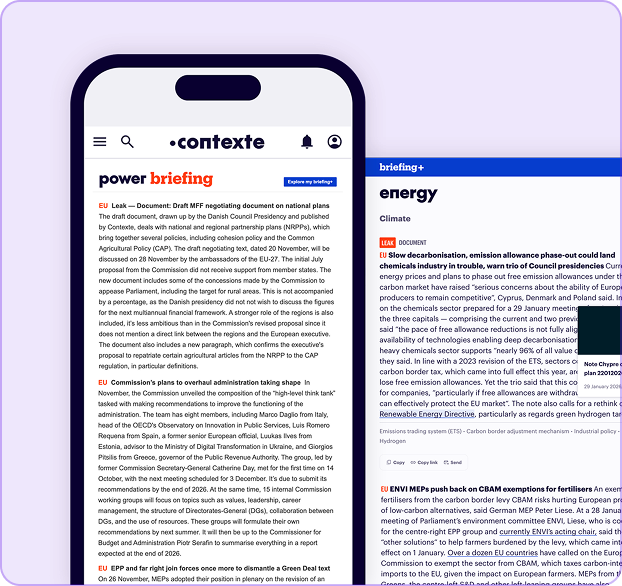
Launched in March 2025, Briefing+ turned the daily Briefing into a working interface.
We’ve long wanted to ensure that people could work directly on the Briefing. We know that readers need information, but also need to act on it quickly.
The Briefing remains the starting point of the day. But it is no longer a format just for reading — it has become an interactive workspace for monitoring what matters.
We’ve added capabilities that go beyond reading: actively tracking amendments, previewing documents, managing keyword alerts, following legislative files and sharing relevant updates with a team.
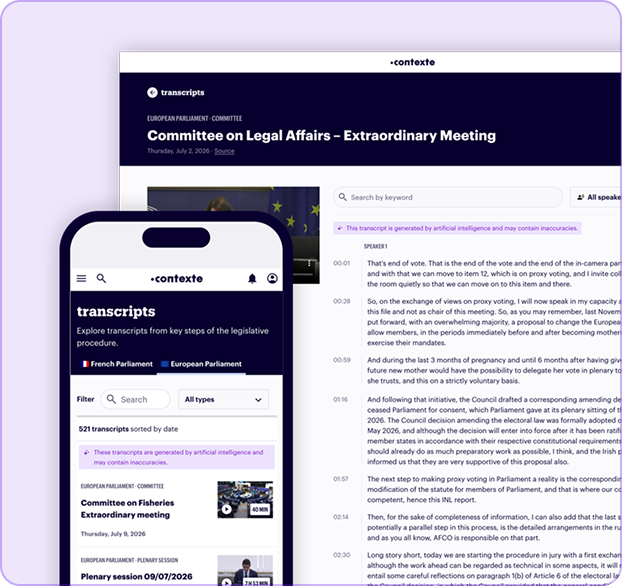
Transcripts
After a successful beta, Transcripts became a core feature of the Complete tier in March 2025.
We collected substantial feedback from subscribers and our journalists on the importance of listening to parliamentary debates, but we also heard how time-consuming that is. So, our Product team came up with Transcripts as a core feature to help with the heavy lifting of watching these debates online; it is now part of our Complete tier.
These transcripts make parliamentary debates easier to follow at scale. This means subscribers can be notified when a topic, organisation, sector or stakeholder is mentioned — even in sessions that they couldn’t follow in real time.
Hours of institutional video can now be searched, filtered and made use of without waiting for official minutes or personally watching entire sessions.
Parliamentary directories
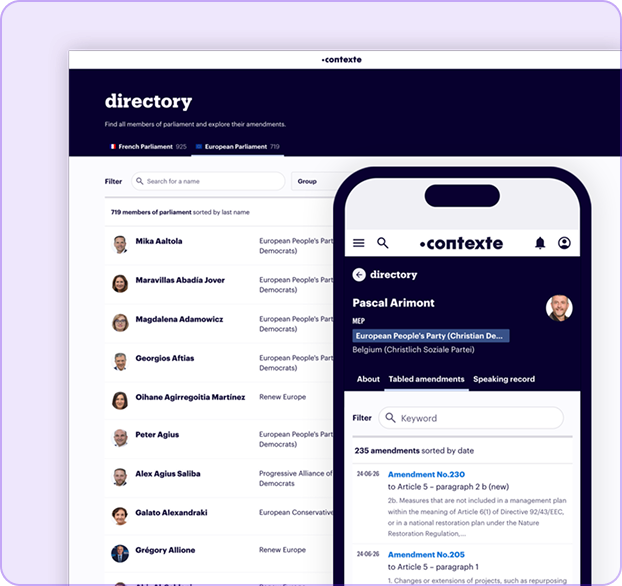
Between March and July 2025, we expanded our parliamentary intelligence with three directories: of deputies and senators — members of the French lower and upper houses — and of Members of the European Parliament (MEPs).
For anyone mapping stakeholders, preparing meetings, monitoring influence or analysing political alignments, these directories provide a structured entry point into parliamentary activity.
Alerts Centre
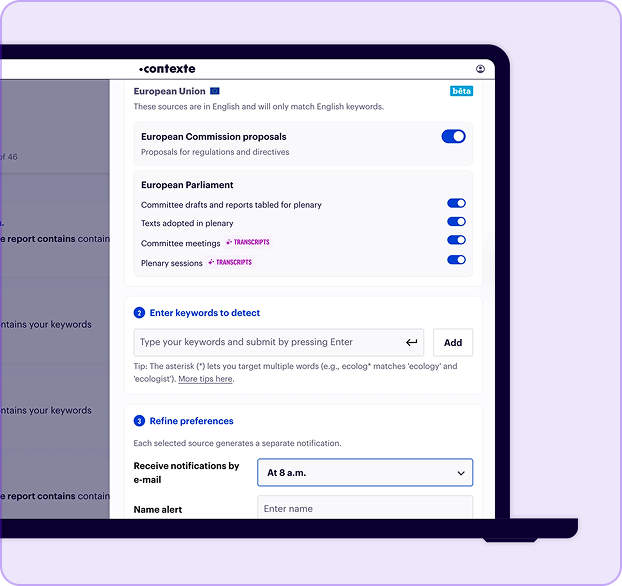
In July 2025, we redesigned the Alerts Centre to make monitoring easier to manage, easier to understand, and better adapted to EU policy work.
The ambition was to extend to EU policy monitoring a capability that Contexte had already built for the French legislative process: a structured way to follow files, keywords and institutional signals without manually having to check multiple sources.
Alerts are now grouped by keyword or legislative file, legislative monitoring results are integrated directly, and the configuration interface has been simplified.
The result is a more coherent experience: less context switching, fewer missed signals, and a clearer view of what requires attention across policy developments.
Together, the new offering and the new monitoring features support the same objective: making Contexte more useful to more organisations — more affordable, more actionable and more closely aligned with the way public affairs professionals actually work.
A few final words
At Contexte, putting people first isn’t just a line in a mission statement. This annual report was forged in brainstorming sessions, during long periods of writing and editing, and through meticulous design tweaks.
A huge thank you to the colleagues who brought these pages to life: Anna Hubert, Antoine de Cassan, Clémentine Forissier, Erwan Le Cornec, Hélène de Viviés, Jack Shickler, Jean-Christophe Boulanger, Jean-Sébastien Lefebvre, Louise Bocquin, Marie-Catherine Beuth, Naïma Mauchauffée, Pedro Victória, and Saousan Chamkhia.
Of course, no symphony plays without its conductors, so a shoutout to Martina Fontana and Samuel Azoulay for orchestrating the entire project. Making it all look stunning was our design team: Yann Proust, Nicolas Queffélec, and Adèle Orain. And finally, keeping us grammatically flawless and elegant were our proofreaders, Alastair Macdonald for English and Sandra Bosc and Éric Bruckner for French.
If you have questions or want to connect with us, send us a message here or connect with us on LinkedIn.
